
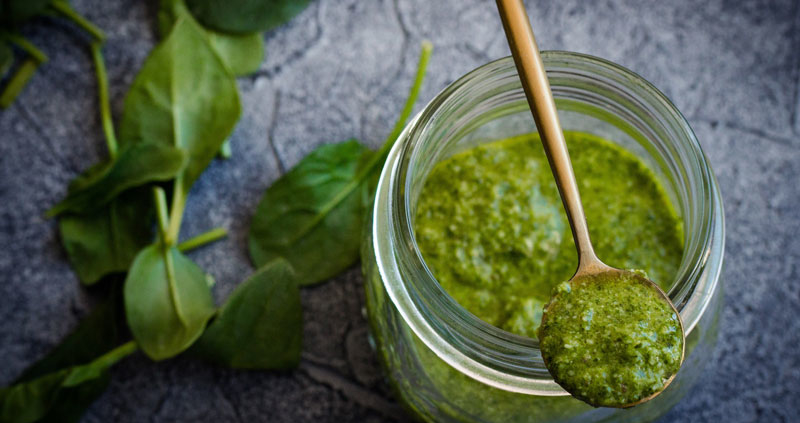
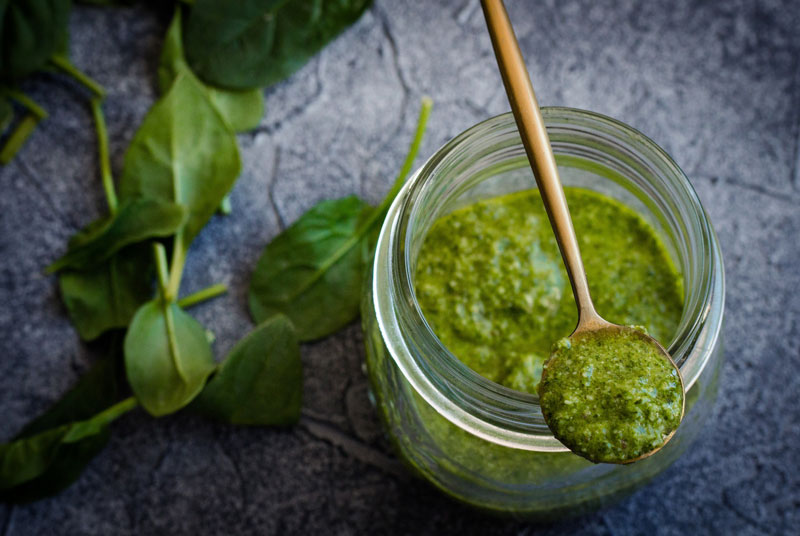
 Rich, lively, and pungent, a first-class pesto sauce is among the true delights of Italian cuisine. Yet, its bold, intense flavors– salty, floral, bitter, and slightly creamy–can make wine pairing a challenge. To make matters more difficult, pesto sauce is prepared raw, which means that there is no use of heat to help mellow the flavors. With all of that going on, the last thing you need is an oaky or overly fruity wine to spoil the fun.
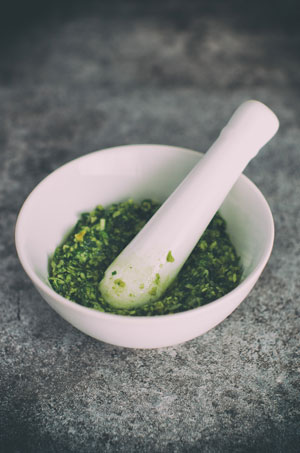 The most traditional style, pesto alla Genovese, comes from the Ligurian coast and dates back at least 150 years. This classic recipe always includes the exact same seven ingredients: fresh basil, pine nuts, garlic, olive oil, Pecorino cheese, Parmigiano cheese, and sea salt. Of course, there are numerous variations (any of which might be considered a capital offense in Genoa), but this simple combination (customarily crushed with mortar and pestle) is perhaps the most time-honored. (There is one particular variant, sometimes referred to as pesto alla Portofino, that adds crushed or pureed tomatoes to the mix and is certainly worth investigating.)
Pairings for Pesto alla Genovese
For pesto alla Genovese, one of the first varietals that leaps to mind is vermentino. Usually quite dry and boasting a vibrant saline quality, vermentino doesn’t get in the way. It’s crisp, refreshing, and often boasts a delicate citrus note, helping to cleanse the palate.
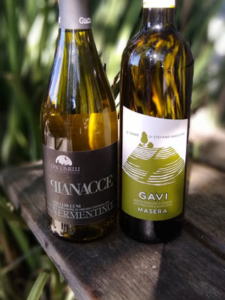 In keeping with the dish’s Ligurian roots, look for vermentino (and the closely related pigato) from coastal Ligurian appellations like Riviera Ligure di Ponente and Colli di Luni (which overlaps into Tuscany). Another neighboring contender is the sleek, bright, subtly fruited Gavi, which is made from the cortese grape and originates in Piemonte, just north of the Ligurian border. At Paul Marcus Wines, you can find the bracingly fresh vermentino Colli di Luni from Giacomelli, along with the ripe but balanced Gavi Masera by Stefano Massone.
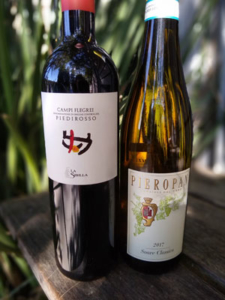 Our next stop is in the Veneto region of northeast Italy, specifically the Soave DOC outside of Verona. The whites of this area feature the garganega grape; though still dry and zesty, Soave wines offer an oily texture, undertones of wildflowers, and a suggestion of almonds that complement the flavors of pesto rather well. We’re proud to include a selection from Pieropan at Paul Marcus Wines, which is one of the area’s most renowned producers, as well as offerings from Suavia and Ca’ Rugate.
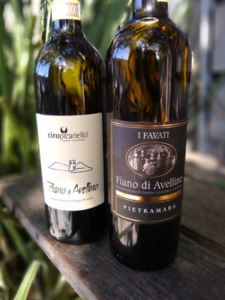 If you’re looking for a pesto partner that will stand toe to toe with your fragrant and verdant sauce, go for Fiano di Avellino from the southern region of Campania. Occasionally referred to as “pesto in a bottle,” fiano’s wild intensity will only enhance the flavor explosion that pesto sauce provides. Robust, nutty, aromatic, and herbaceous, fiano realizes its finest expression when grown on Campania’s volcanic terrain, giving it a flinty edge. Top it off with a zippy acidity, and you have a grape that’s ready to tangle with a top-notch pesto. For a lighter, fresher expression, grab a bottle of Pietramara, made by I Favati, at Paul Marcus Wines, or go to the age-worthy version produced by Ciro Picariello, which is a bit richer and rounder.
Unfortunately for red-wine drinkers, tannins and pesto are generally not friends; prominent tannins will only serve to accentuate the bitterness of the dish and obscure its fresh, herbal magic. However, if you must turn to a red wine, piedirosso (also from Campania’s volcanic soils) delivers smoky, savory notes along with decidedly mild tannins and a medium body. Try La Sibilla’s piedirosso, from Campi Flegrei, available at Paul Marcus Wines.
For more about these suggestions, please visit us at the shop. If you have any pairing questions you’d like to discuss, email us at info@paulmarcuswines.com.
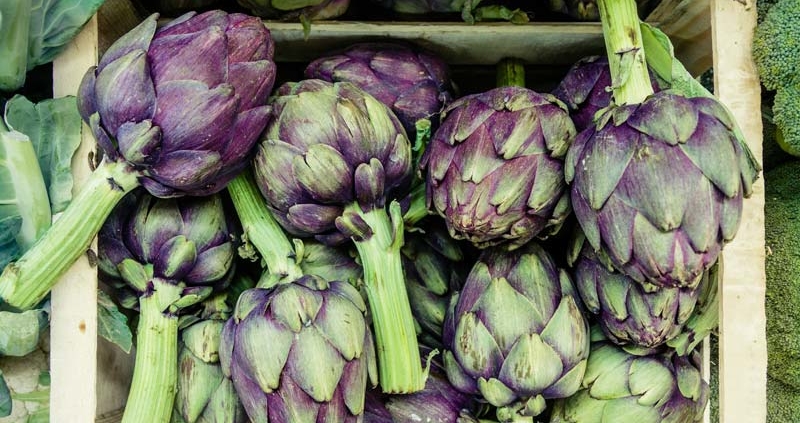
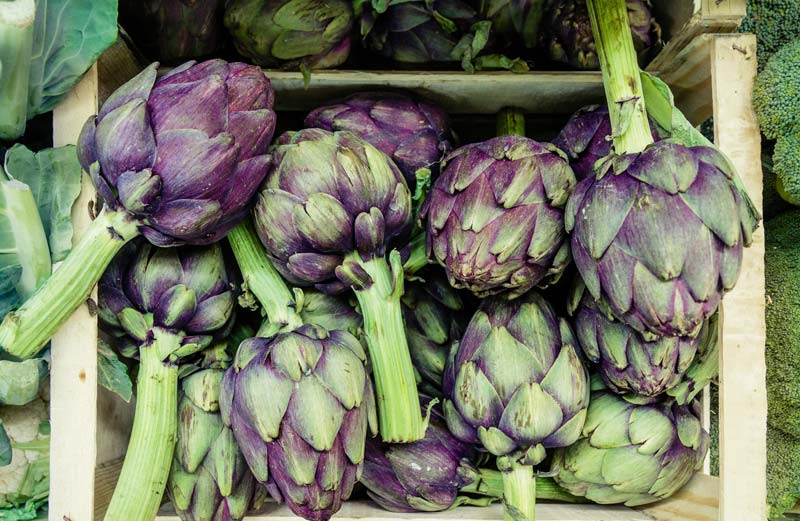
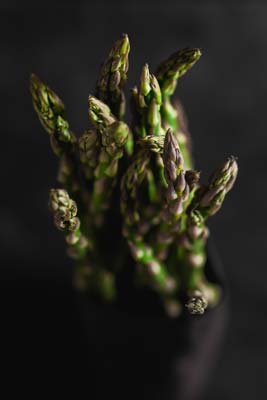 Now, let’s move on to asparagus. Since it has such an abundance of umami flavor, this veggie can make your glass or red taste metallic and stunted. I know, if that is the case, then why does red wine taste so wonderful with steak or cheeses, both which contain that lovely “umami” flavor? The answer is that unlike these foods, asparagus (and artichokes, for that matter) don’t have enough fat and salt in them, and your red ends up tasting acerbic. So if you are featuring asparagus in one of your recipes, it’s definitely best to reach for a